
Continuous Emission Monitoring Systems (CEMS)
CEMS Data Acquisition and DOE Reporting (DAS and DIS)
How CEMS readings travel from the stack to the Department of Environment: the data acquisition system (DAS) that records them and the data interface system (DIS) that transmits them to the DOE system for CEMS.
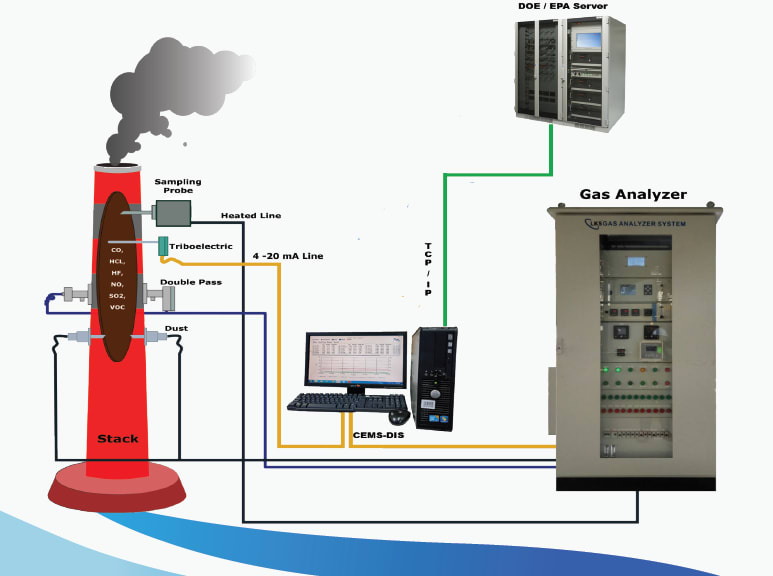
Every reading a CEMS takes has to reach the Department of Environment complete and on time. Two systems make that happen: the data acquisition system (DAS) at the plant, and the data interface system (DIS) that links it to DOE.
From analyzer to DOE
- The gas, dust and opacity analyzers at the stack send their signals, typically over 4–20 mA lines or a digital fieldbus, to the DAS.
- The DAS records the readings and calculates the averages used for compliance.
- The CEMS data interface system (CEMS-DIS) stores the data from the DAS and transmits it over an internet connection to the DOE system for CEMS, following DOE's data telemetry protocol.
Valid averages
| Average | Rule |
|---|---|
| One-minute average | Valid when it contains readings for at least 45 seconds of the minute |
| Half-hour average | Built from one-minute sub-averages; valid with at least 22 of them (75%) |
| Daily average | Derived from the half-hour averages of the operating day |
Opacity is averaged over one minute and other parameters over 30 minutes. For compliance, no daily average may exceed the emission limit value and no half-hourly average may exceed twice that value.
Records
DOE recommends keeping the monitoring data in the CEMS-DIS database for at least five years, and the yearly evaluation results must be kept for at least three years.
LKS data systems
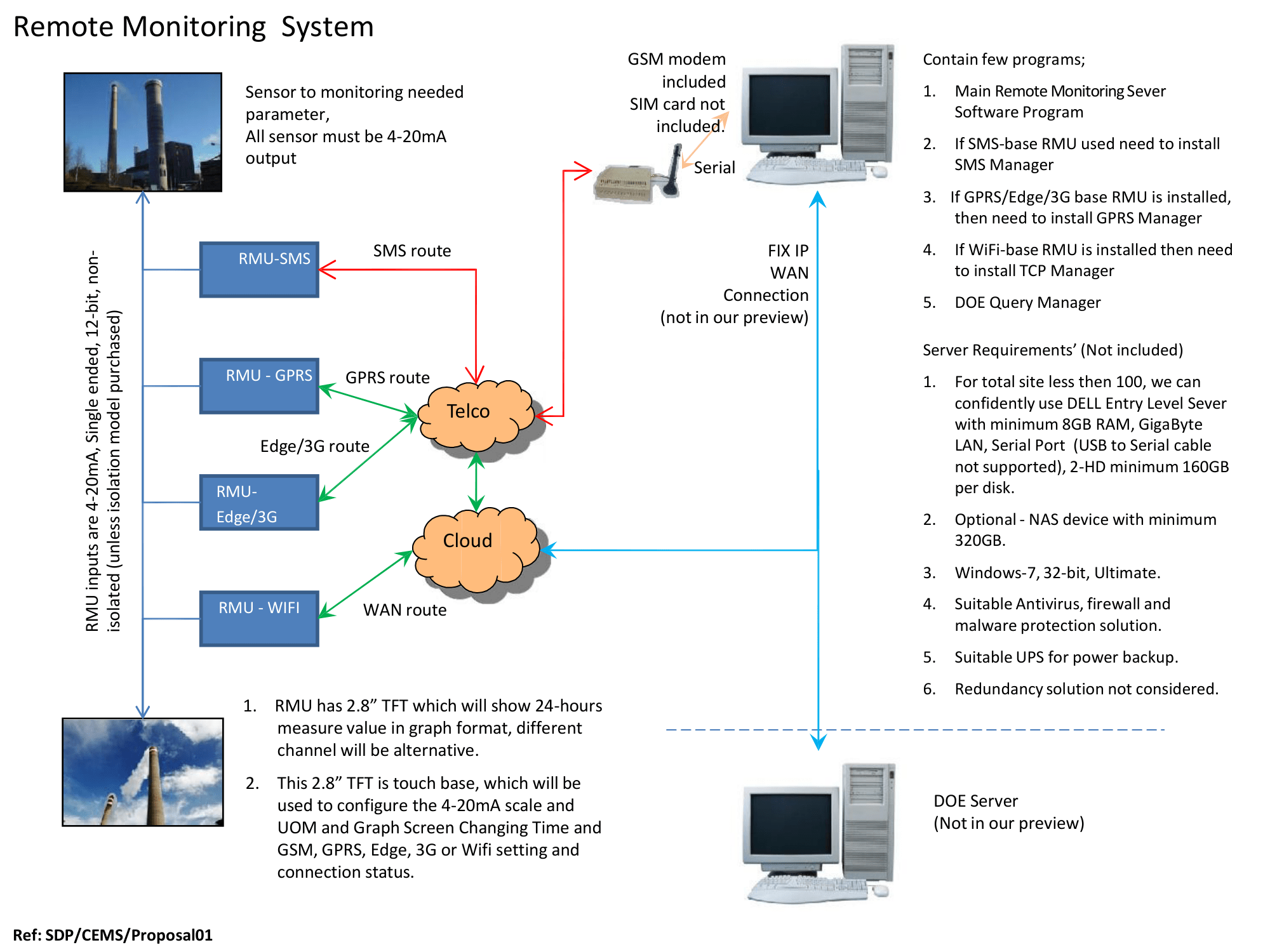
LKS supplies the data side of a CEMS with the analyzers, so one team is responsible from the stack to the report. Our remote monitoring systems collect 4–20 mA signals and send them over RS485 Modbus, GSM or Wi-Fi to a cloud server, and DAS and DIS packages are configured for each installation on request. See the CEMS solution page for complete systems and CEMS calibration and maintenance for the quality assurance that keeps the data valid.
Products
Equipment for this application.
Remote Monitoring Units
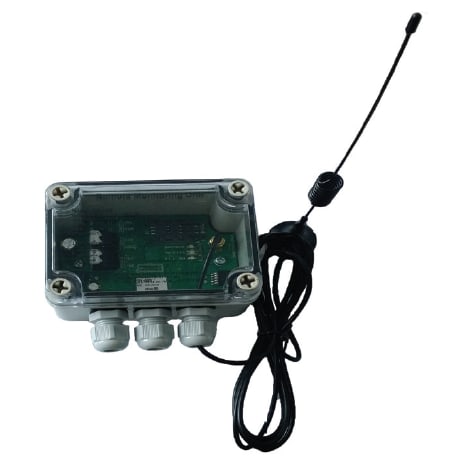
Remote monitoring units that collect 4–20 mA signals from analysers and meters on site and send them over GSM to a cloud server, with mobile apps and emailed daily and monthly reports.View range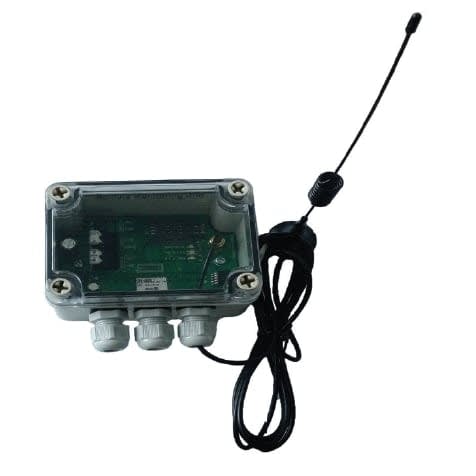
Remote Monitoring System
Remote monitoring systems that collect 4–20 mA signals at remote monitoring units and send them to a central server over SMS, GPRS/3G or Wi-Fi for unmanned sites and emission reporting.View range
How does CEMS data reach DOE?
The data acquisition system (DAS) records the readings and the data interface system (DIS) transmits them to the DOE system for CEMS.
How is CEMS compliance assessed?
Over each calendar year, no daily average may exceed the emission limit value and no half-hourly average may exceed twice that value. Opacity is averaged over one minute and other parameters over 30 minutes.
Read next
Related topics.
 01
CEMS for Power Plants
Continuous emission monitoring system (CEMS) for power plant boilers and combustion turbines above 10 MWe, combining extractive and in-situ gas analysers with a particulate analyser to measure SO2, NO2, CO and total PM.Read more- 02
CEMS for Cement Plants
Continuous emission monitoring system (CEMS) for cement kilns and related non-metallic sources, combining extractive and in-situ gas analysers with a particulate in-situ analyser to measure SO2, NO2 and total PM/dust against DOE emission limits.Read more - 03
CEMS for Oil and Gas: Refineries and Natural Gas Facilities
Continuous emission monitoring system (CEMS) for oil and gas refineries and natural gas processing and storage facilities, combining extractive and in-situ gas analysers with a particulate analyser to measure SO2 and total PM.Read more 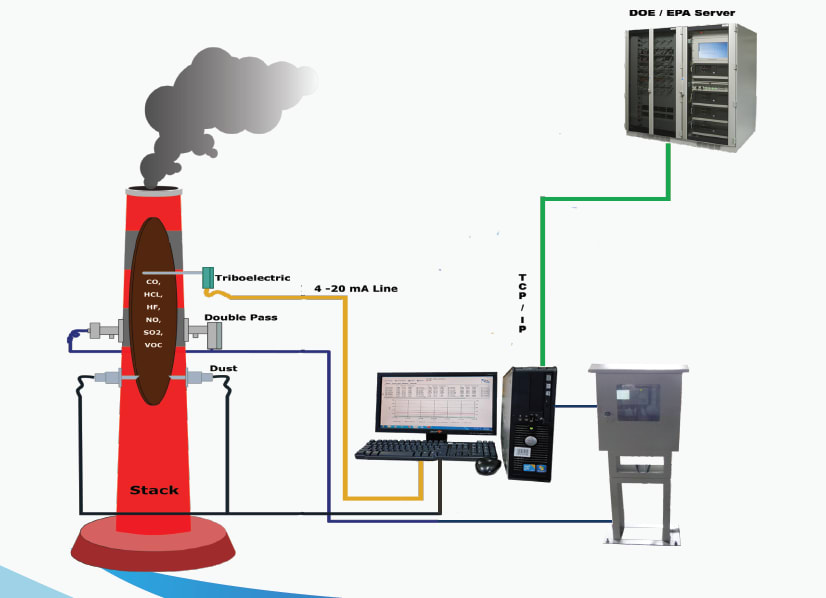 04
CEMS for Palm Oil Mills
Continuous emission monitoring system (CEMS) for palm oil mills, combining extractive gas analyzers, in-situ gas analyzers and particulate in-situ analyzers to measure total PM/dust and opacity, with data sent to the DOE server.Read more- 05
CEMS for Waste Incinerators
Continuous emission monitoring system (CEMS) for waste incinerators of all sizes, combining extractive and in-situ gas analysers with an in-situ particulate analyser to measure total PM, NMVOC, HCl, HF, SO2, NO2 and CO against DOE emission limits.Read more - 06
CEMS for Iron and Steel Mills (Ferrous Metals)
Continuous emission monitoring system for iron and steel mills, combining extractive gas analysers, in-situ gas analysers and in-situ particulate analysers to measure SO2, NO2 and total PM from sinter plants, coke ovens and furnaces.Read more
Lifecycle support
Installed, calibrated and maintained.
With more than two decades in valves and instrumentation across a diverse range of industries, we keep instruments accurate and valves healthy, because valve health management is vital for plant safety.
- Installation & commissioning
- Calibration & testing
- Maintenance & overhaul
- Dismantling & replacement
Get in touch
Need a quote or technical advice?
Tell us about your application and our engineers will recommend the right instrument or system.
- 01Share your applicationProcess, medium, range and site conditions.
- 02Engineer recommendationWe match the right instrument or system to your process.
- 03Quotation and supportSupply, installation, calibration and after-sales service.