
Continuous Emission Monitoring Systems (CEMS)
CEMS Calibration, Quality Assurance and Maintenance
How a CEMS stays accurate and compliant after commissioning: the functional test, QAL2 calibration, QAL3 drift checks and the annual surveillance test, with maintenance, spare parts and on-site support from LKS.
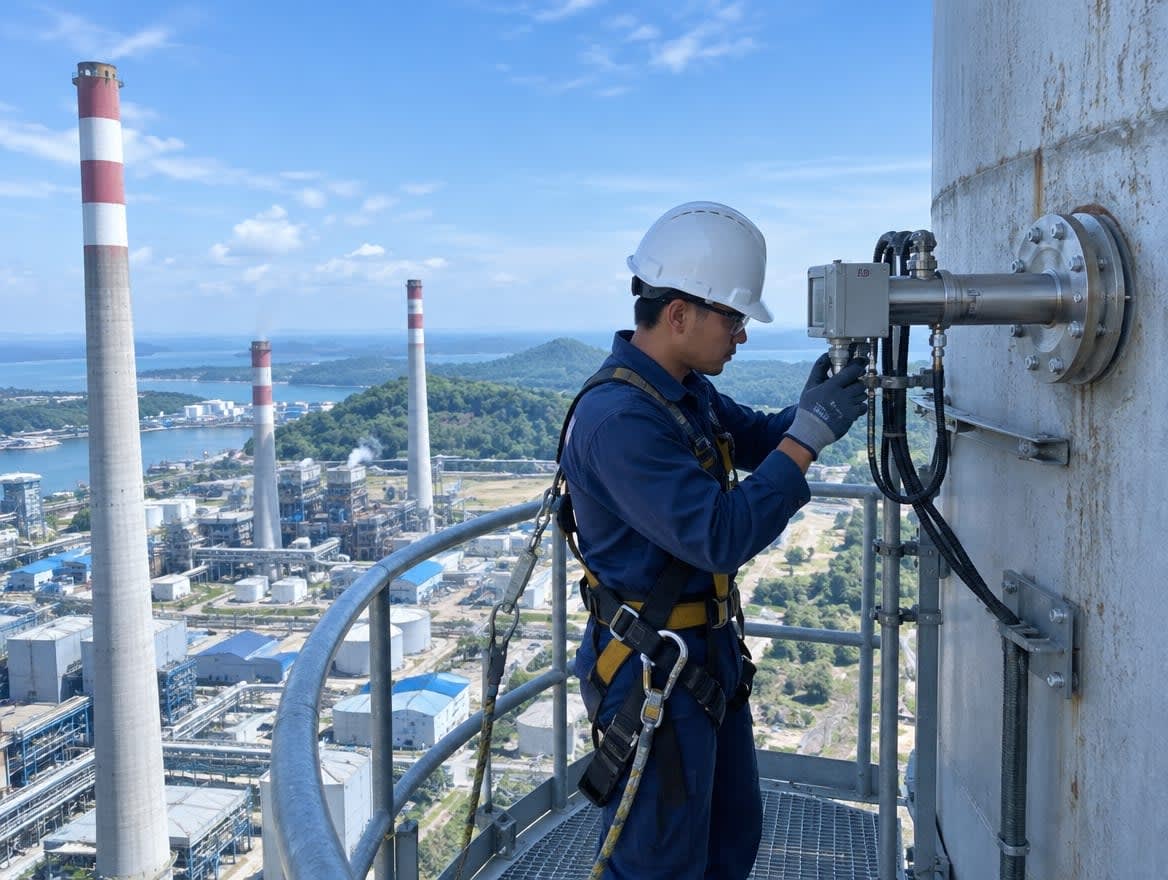
A CEMS is only as useful as the data it reports. After installation, the Department of Environment's CEMS guidelines set a sequence of quality assurance steps that prove the system measures correctly, and keep proving it for as long as the source operates.
The quality assurance cycle
| Step | When | Purpose |
|---|---|---|
| Functional test | After installation, and as the first part of each AST | Checks alignment and cleanliness, the sampling train, and documentation and records |
| QAL2 calibration and variability test (QAL2-CVT) | Within 6 months of commissioning, then at least every 3 years | Calibrates the CEMS against parallel reference measurements |
| QAL3 ongoing performance monitoring | Continuously, by the plant operator | Tracks zero and span drift so faults are found early |
| Annual surveillance test (AST) | Every year | Confirms that the calibration is still valid and variability is within limits |
A new QAL2 is also required after a CEMS failure or a repair that changes the results significantly, after a change of fuel, after a significant change in plant operation, or when the QAL3 checks or the AST show it is needed. Plants firing biomass, whose fuel varies from batch to batch, may need a QAL2 every year in place of the AST.
Annual surveillance test
The AST starts with a functional test and continues with at least five parallel measurements against the standard reference method, spread over the measuring day, each at least one hour apart and sampled for at least 30 minutes. The results confirm whether the existing calibration function still holds.
Reporting obligations
- Results of the yearly evaluation of the continuous monitoring are submitted to DOE within three months after the end of each calendar year, and kept for at least three years
- Excess emissions are reported to DOE within 24 hours of discovery
- Failure of a monitoring device is reported to DOE within one hour
How LKS supports your CEMS
LKS supports each system it supplies through its working life. On request, our engineers carry out preventive maintenance and site visits, prepare the CEMS for its functional test, QAL2 and AST, troubleshoot analyzer and sampling faults, and supply spare parts such as heated gas sampling probes (heated to 180 °C, in SS316Ti stainless steel) and compressor sample gas coolers. See the CEMS solution page for complete systems, or contact our team to arrange a service visit or a maintenance contract.
Products
Equipment for this application.

Dust & Opacity Analyzers
Dust and opacity analyzers for continuous particulate monitoring in stacks and ducts, using transmittance, scattered light, backscatter, extractive and triboelectric principles.View range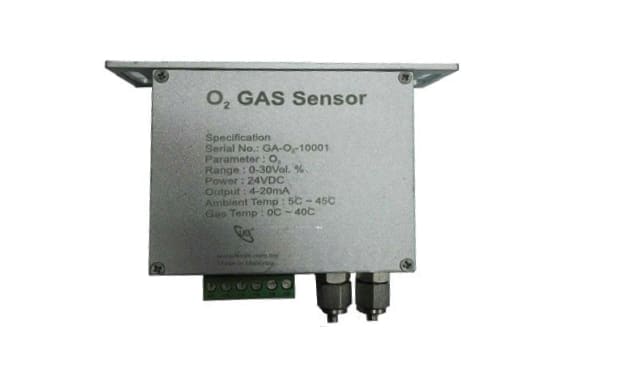
Multigas Analyzer
Multigas analyzers for flue gas and process gas, measuring SO2, NOx, CO, CO2, O2, NH3 and more by UV DOAS, NDIR, TDLAS or electrochemical principles, with Modbus outputs.View range

What is QAL2 and how often is it needed?
QAL2 is the calibration and variability test that calibrates a CEMS against parallel reference measurements. It is needed within six months of commissioning, at least every three years after that, and again after major repairs, fuel changes or significant process changes.
What is the annual surveillance test (AST)?
A yearly check that the CEMS calibration is still valid: a functional test followed by at least five parallel reference measurements spread over the measuring day.
What must be reported if a CEMS fails?
The failure of a monitoring device must be reported to DOE within one hour, and an excess emission within 24 hours of its discovery.
Read next
Related topics.
 01
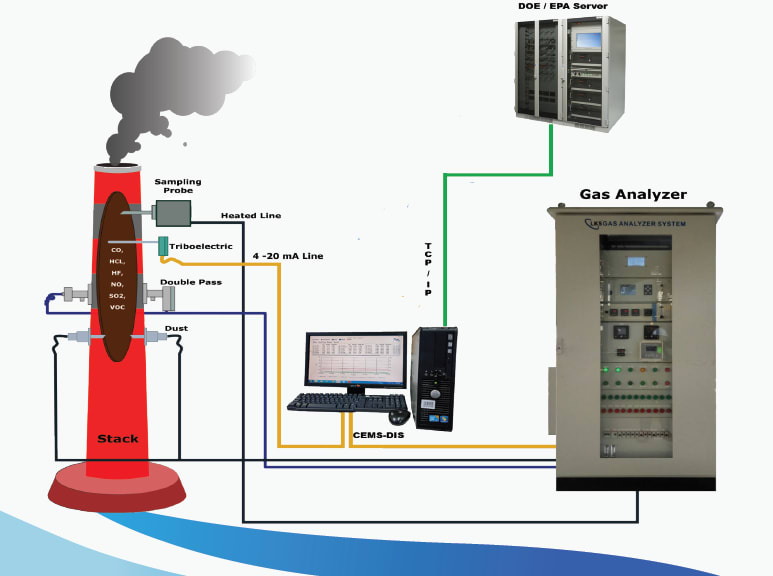
CEMS for Power Plants
Continuous emission monitoring system (CEMS) for power plant boilers and combustion turbines above 10 MWe, combining extractive and in-situ gas analysers with a particulate analyser to measure SO2, NO2, CO and total PM.Read more- 02
CEMS for Cement Plants
Continuous emission monitoring system (CEMS) for cement kilns and related non-metallic sources, combining extractive and in-situ gas analysers with a particulate in-situ analyser to measure SO2, NO2 and total PM/dust against DOE emission limits.Read more - 03
CEMS for Oil and Gas: Refineries and Natural Gas Facilities
Continuous emission monitoring system (CEMS) for oil and gas refineries and natural gas processing and storage facilities, combining extractive and in-situ gas analysers with a particulate analyser to measure SO2 and total PM.Read more 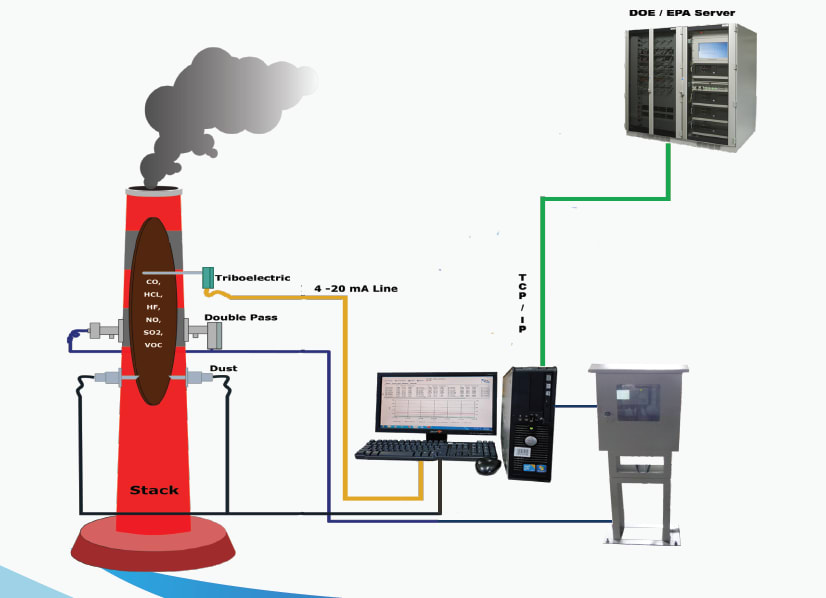 04
CEMS for Palm Oil Mills
Continuous emission monitoring system (CEMS) for palm oil mills, combining extractive gas analyzers, in-situ gas analyzers and particulate in-situ analyzers to measure total PM/dust and opacity, with data sent to the DOE server.Read more- 05
CEMS for Waste Incinerators
Continuous emission monitoring system (CEMS) for waste incinerators of all sizes, combining extractive and in-situ gas analysers with an in-situ particulate analyser to measure total PM, NMVOC, HCl, HF, SO2, NO2 and CO against DOE emission limits.Read more - 06
CEMS for Iron and Steel Mills (Ferrous Metals)
Continuous emission monitoring system for iron and steel mills, combining extractive gas analysers, in-situ gas analysers and in-situ particulate analysers to measure SO2, NO2 and total PM from sinter plants, coke ovens and furnaces.Read more
Lifecycle support
Installed, calibrated and maintained.
With more than two decades in valves and instrumentation across a diverse range of industries, we keep instruments accurate and valves healthy, because valve health management is vital for plant safety.
- Installation & commissioning
- Calibration & testing
- Maintenance & overhaul
- Dismantling & replacement
Get in touch
Need a quote or technical advice?
Tell us about your application and our engineers will recommend the right instrument or system.
- 01Share your applicationProcess, medium, range and site conditions.
- 02Engineer recommendationWe match the right instrument or system to your process.
- 03Quotation and supportSupply, installation, calibration and after-sales service.