
On this page
Key takeaways
- Radar measures level without touching the product by timing a microwave echo.
- A magnetic bypass gauge shows level on a sealed indicator driven by a magnetic float, with no glass in contact with the medium.
- Radar suits continuous measurement in closed vessels; bypass gauges give rugged local indication, with an optional analog output.
- Medium, pressure, temperature and whether you need a signal or a local view decide the choice.
Why the method matters
Level is one of the most measured variables in any plant, from boiler drums to chemical tanks. The right method depends on what is in the vessel, the pressure and temperature, and whether operators need a number in the control room, a clear view on site, or both.
How a radar level transmitter works
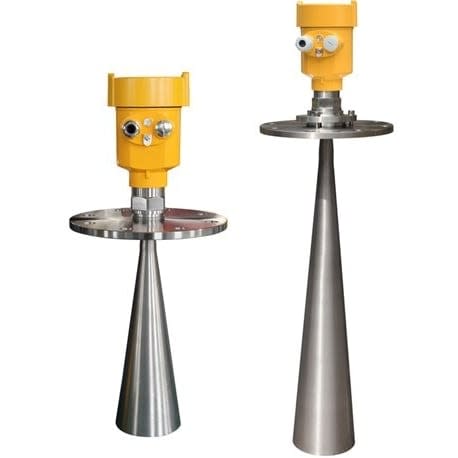
A radar level transmitter sends microwave pulses towards the surface of the product and detects the echo. Because the wave travels at the speed of light, the transmitter calculates the distance, and so the level, quickly and accurately.
- Non-contact: nothing touches the product, which suits liquids, sizing agents and granules.
- Low energy: the microwave pulse is harmless to people.
- Flexible mounting: works in metal or non-metallic vessels and tubes.
How a magnetic bypass level gauge works
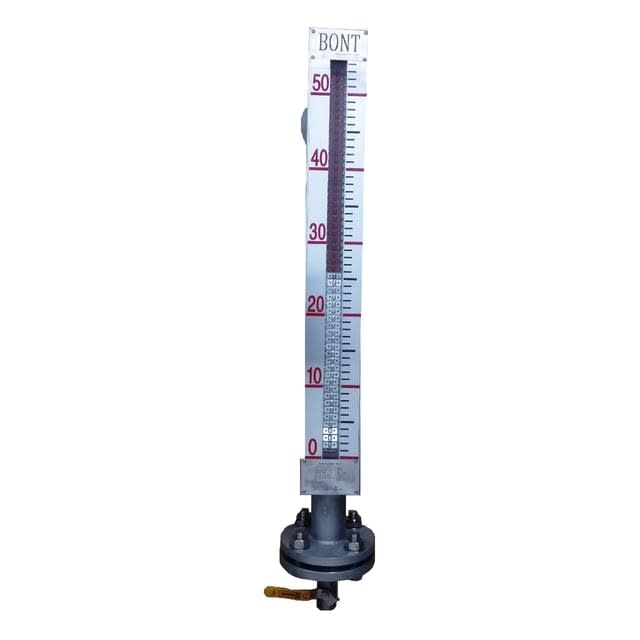
A magnetic bypass level gauge is a chamber mounted alongside the vessel. A float carrying a magnet rises and falls with the liquid, and its magnet flips the indicators of a magnetic bar graph on the outside.
- Sealed: the hermetically sealed glass tube never touches the medium.
- Rugged: SS304 or SS316 bodies handle aggressive, combustible, toxic and hot compressed liquids at low, medium and high pressures.
- Clear at a glance: the bar graph is easy to read from a distance, and an analog signal output can be added.
Side by side
- Signal to the control room: radar provides it as standard; a bypass gauge offers it as an option.
- Local indication: a bypass gauge is the clearer choice; radar needs a display.
- Contact with the product: radar never touches it; a bypass gauge’s float sits in the liquid inside the chamber.
- Typical homes: radar for storage tanks, silos and process vessels; bypass gauges for boilers, deaerators, surge tanks, separators, feed water heaters and propane vessels.
Questions to ask before you choose
- What is the medium: clean liquid, foam, slurry or solids?
- What are the pressure and temperature ranges?
- Do you need a 4–20 mA or digital signal, local indication, or both?
- Are there agitators, internal structures or heavy vapour in the vessel?
Not sure? Level switches, ultrasonic and submersible transmitters are also part of our level instruments range, and our engineers can recommend the right fit for your vessel.