On this page
Key takeaways
- A magnetic flow meter measures the voltage a conductive liquid generates as it moves through a magnetic field.
- It suits water, wastewater and many chemicals, but not gases, steam or non-conductive liquids such as oil.
- The liner material and a full pipe at the meter matter more than almost anything else for accuracy.
- Good earthing, enough straight pipe and regular verification keep readings trustworthy.
The principle: Faraday’s law
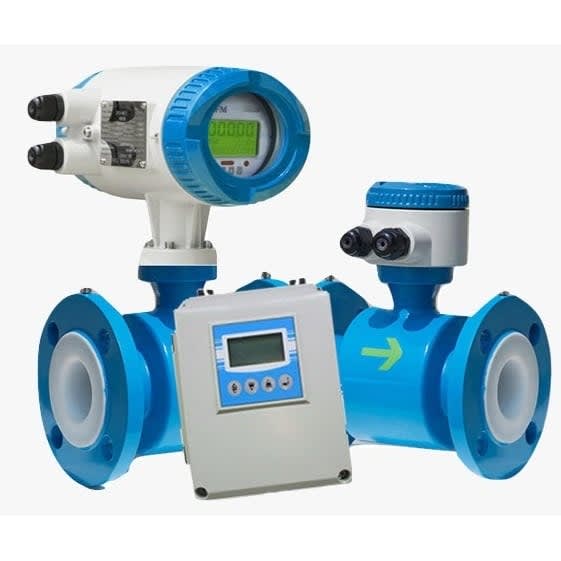
An electromagnetic flow meter, often called a magmeter, works on Faraday’s law of electromagnetic induction. Coils in the meter body create a magnetic field across the pipe. When a conductive liquid flows through that field, a small voltage is induced between two electrodes, and its size is proportional to the velocity of the liquid.
The converter turns that velocity into a flow rate using the pipe’s cross-section. Because nothing moves inside the pipe, there is no wear from the flow and almost no pressure loss.
What it can and cannot measure
- Good fit: water, wastewater, sludge, slurries and most acids, alkalis and other conductive chemicals.
- Not suitable: gases, steam, and non-conductive liquids such as oils, fuels and many solvents.
- Unaffected by: the measurement is independent of fluid density, viscosity, humidity, temperature and pressure, so one meter can handle changing process conditions.
Sizes cover very small to very large lines. Our electromagnetic flow meter is available from DN3 to DN3000.
Choosing the liner
The liner protects the meter body from the liquid, so it should match the medium. Typical choices:
- PTFE or PFA: chemicals and higher process temperatures.
- Hard or soft rubber: water and wastewater; soft rubber also handles mild abrasion.
- Polyurethane: abrasive slurries.
- Ceramic: demanding abrasive or high-wear duties.
When in doubt, share the medium, temperature and pressure with your supplier and let them confirm the liner and electrode material.
Installation tips for accurate readings
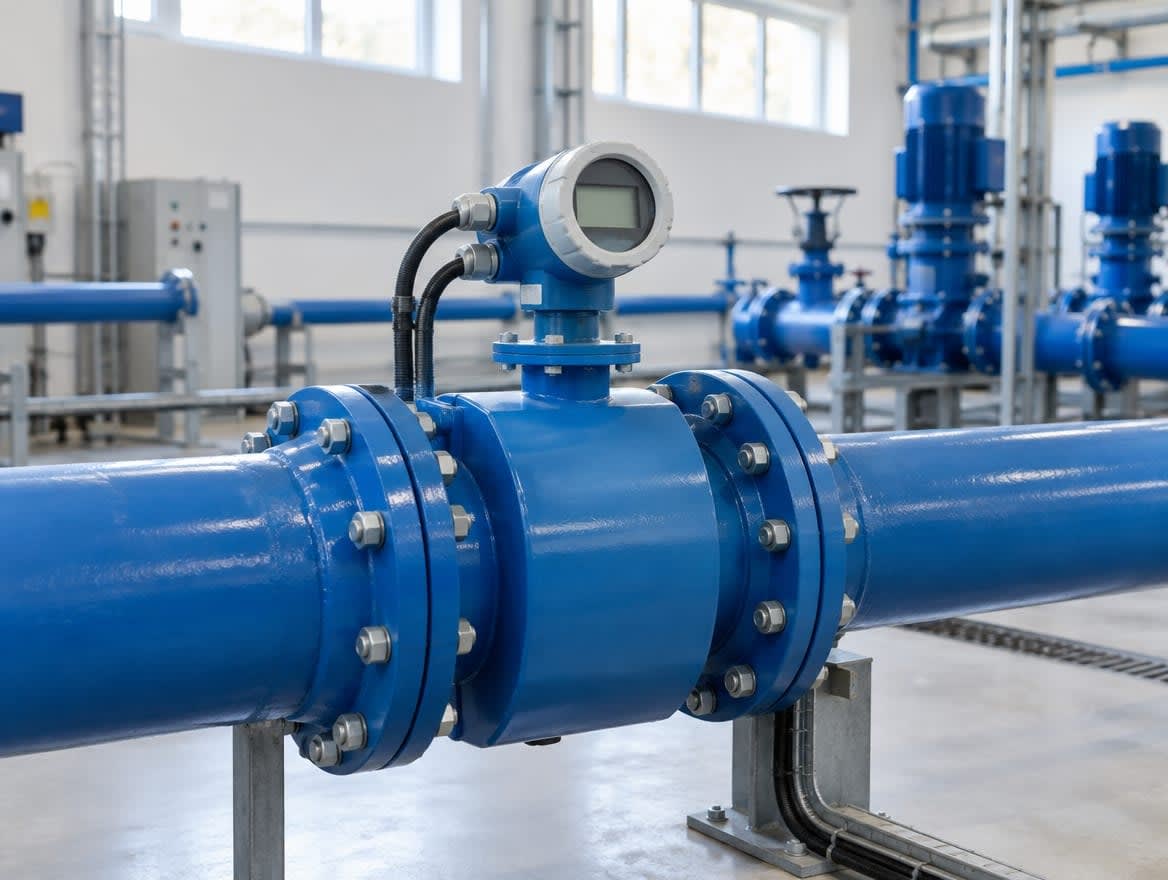
- Keep the pipe full. A partly filled pipe reads wrong. Install on a rising line or a low point, never at a high point where air collects.
- Give it straight pipe. Manufacturers typically ask for around five pipe diameters of straight run upstream and two to three downstream; check the catalogue for the exact figure.
- Mind the electrodes. Mount the meter so the electrodes sit on the horizontal axis, away from air bubbles at the top and sediment at the bottom.
- Earth it properly. Electrical noise is the most common cause of unstable readings. A proper earthing system is part of every installation we deliver.
Where magmeters are used
Water purification and desalination, drinking water distribution networks, revenue metering and billing, leakage detection, irrigation, industrial and cooling water, and wastewater. For IWK we installed ultrasonic flowmeters with standard panels and remote monitoring units across ten regions, and serviced flowmeters at 24 sites in Shah Alam.
Keep it verified
Even a meter with no moving parts drifts if electrodes coat up or wiring degrades. Periodic verification and calibration keep billing and compliance figures defensible, and we can do this on site.