
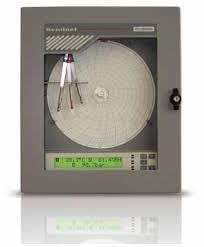
Sentinel Microprocessor Circular Chart Recorder
Model SEN10 / SEN20 / SEN30
Sentinel microprocessor chart recorder with one, two or three pens on a 240 mm circular paper chart, accepting thermocouple, Pt100 RTD and DC voltage or current inputs, with up to six alarms, optional retransmission output and IP55 steel case.
- Category
- Chart Recorder, Recorder
Overview
About the Sentinel Microprocessor Circular Chart Recorder SEN10 / SEN20 / SEN30.
The Sentinel microprocessor recorder is a circular chart recorder and recorder controller with one, two or three pens. It accepts thermocouple types K, T, J, N, E, B, R and S, 3-wire Pt100 RTDs and DC voltage or current signals, and records them on a 240 mm (9.5") circular paper chart driven by a DC stepper motor. Chart speeds range from 1 to 24 hours in steps of one hour and from 2 to 31 days in steps of one day, and each input has high and low measurement ranges. Housed in a steel case with an acrylic door window rated IP55, it is mounted on a panel or a surface.
Features
- One, two or three pen versions, plus flow, dairy and timber kiln versions
- Universal inputs: thermocouples K, T, J, N, E, B, R and S, Pt100 RTD (3-wire), ±2 V, +20 V, ±2 mA and ±20 mA
- RTD accuracy ±0.2 °C (low range below 200 °C) and ±0.8 °C (high range above 200 °C)
- Thermocouple accuracy ±0.25% FS, linear inputs ±0.2% FS
- Minimum span 5 °C for thermocouples K, J, T, E, N and RTD
- 3 or 6 user-configurable alarms
- Optional isolated 0–20 mA or 4–20 mA retransmission output, 12-bit resolution
- Steel case with acrylic door window, IP55, for panel or surface mounting
Applications
- Temperature recording with thermocouples and RTDs
- Recording of DC voltage and current process signals
- Flow recording (flow versions)
- Dairy processing (dairy version)
- Timber kilns (timber kiln version)
Options
- Alarms: 3 (standard on single pen) or 6 (standard on two and three pens)
- Retransmission output: required or not required
- Events pen: required (1 pen only) or not required
- Transmitter power supply: required or not required
LKS supplies the Sentinel microprocessor chart recorder in Malaysia, with installation, configuration and after-sales support. Contact our engineers for model selection and a quotation.
Specifications
| Models | SEN10 (single pen), SEN20 (two pen), SEN30 (three pen); flow versions SEN10F, SEN20F, SEN30F; dairy version SEN20P; timber kiln version SEN20KD |
|---|---|
| Input signals | Thermocouples K, T, J, N, E, B, R & S; platinum RTD (Pt100) 3-wire; DC voltage ±2 V, +20 V; DC current ±2 mA, ±20 mA |
| Temperature ranges | Thermocouples to BS4937 (type B minimum temperature 200 °C); RTD to BS1904:1984; high and low measurement ranges for each input |
| Minimum span | 5 °C (thermocouples K, J, T, E, N and RTD) |
| Thermocouple burn-out | Pull-up or pull-down, link selectable |
| Input protection | ±50 Vdc on signal inputs |
| Accuracy | RTD: low range (below 200 °C) ±0.2 °C, high range (above 200 °C) ±0.8 °C (ambient 20 °C); T/C: ±0.25% FS; linear: ±0.2% FS |
| Temperature stability | ±0.02% FS/°C |
| Alarms | 3 (standard on single pen) or 6 (standard on 2 and 3 pens, option for single pen) |
| Retransmission output (option) | 0 to 20 mA or 4 to 20 mA; 12-bit resolution (0.024%); direct or reverse action; optoelectronic isolation |
| Chart size | 240 mm (9.5") circular paper chart |
| Chart divisions | 40, 50, 60, 70 or 80 linear divisions |
| Chart drive | DC stepper motor |
| Chart speeds | 1 to 24 hours in steps of one hour; 2 to 31 days in steps of 1 day |
| Power supply | 115 V or 230 V AC ±10%, switch selectable, 50/60 Hz |
| Case | Steel case with acrylic door window |
| Protection class | IP55 |
| Mounting | Panel or surface |
Lifecycle support
Installed, calibrated and maintained.
With more than two decades in valves and instrumentation across a diverse range of industries, we keep instruments accurate and valves healthy, because valve health management is vital for plant safety.
- Installation & commissioning
- Calibration & testing
- Maintenance & overhaul
- Dismantling & replacement
Related products
 Chart Recorder9.5 Inch Circular Chart RecorderView details
 Chart RecorderHybrid RecorderView details
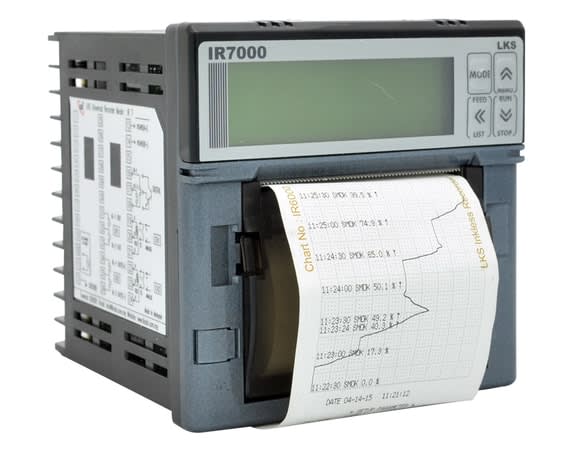 Chart RecorderInkless Recorder IR7000View details
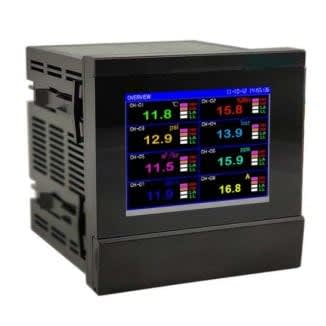 DataloggerPR8000 DataloggerView details
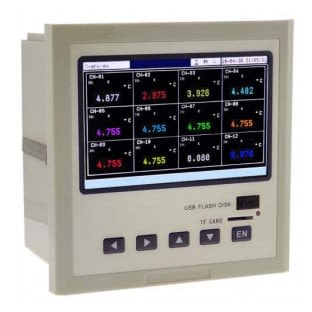 DataloggerPR4200 Paperless Recorder DataloggerView details
 Chart Papers & PenRecorder Chart Paper & PenView details
 DataloggerTouch Screen Datalogger DL10 / DL20 / DL30View details
 Flow MeterElectromagnetic Flow MeterView details
Get in touch
Need a quote or technical advice?
Tell us about your application and our engineers will recommend the right instrument or system.
- 01Share your applicationProcess, medium, range and site conditions.
- 02Engineer recommendationWe match the right instrument or system to your process.
- 03Quotation and supportSupply, installation, calibration and after-sales service.